Early
Life
Audrey Kathleen Ruston (later, Hepburn-Ruston) was born on 4 May 1929 at number 48 Rue Keyenveld in Ixelles, Brussels, Belgium. She was known to her family as Adriaantje.
Hepburn's mother, Baroness Ella van Heemstra (12 June 1900 - 26 August 1984), was a Dutch noblewoman. Ella was the daughter of Baron Aarnoud van Heemstra, who served as mayor of Arnhem from 1910 to 1920 and as governor of Dutch Guiana from 1921 to 1928, and Baroness Elbrig Willemine Henriette van Asbeck (1873–1939), a granddaughter of Count Dirk van Hogendorp. At age 19, she married Jonkheer Hendrik Gustaaf Adolf Quarles van Ufford, an oil executive based in Batavia, Dutch East Indies, where they subsequently lived. They had two sons, Jonkheer Arnoud Robert Alexander Quarles van Ufford (1920–1979) and Jonkheer Ian Edgar Bruce Quarles van Ufford (1924–2010), before divorcing in 1925,four years before Hepburn's birth.
Hepburn's father, Joseph Victor Anthony Ruston (21 November 1889 – 16 October 1980), was a British subject born in Auschitz, Bohemia, Austria-Hungary.He was the son of Victor John George Ruston, of British and Austrian background, and Anna Juliana Franziska Karolina Wels, who was of German-Austrian origin and born in Kovarce. In 1923–1924, Joseph was an Honorary British Consul in Semarang in the Dutch East Indies, and prior to his marriage to Hepburn's mother, was married to Cornelia Bisschop, a Dutch heiress. He later changed his surname to the more "aristocratic" double-barrelled Hepburn-Ruston, perhaps at Ella's insistence, as he mistakenly believed himself descended from James Hepburn, third husband of Mary, Queen of Scots.
Hepburn's early childhood was sheltered and privileged. Her multinational background was enhanced by the family's traveling between three countries due to her father's job.

Audrey's mother Ella, Baroness van Heemstra, in the early 1930s. (Dotti Collection)
In the mid-1930s, Hepburn's parents recruited and collected donations for the British Union of Fascists (B.U.F). Her mother met Adolf Hitler and wrote favourable articles about him for the B.U.F. Joseph left the family abruptly in 1935 after a "scene" in Brussels when Hepburn was six; later she often spoke of the effect on a child of being "dumped" as "children need two parents". Joseph left the family and moved to London, where he became more deeply involved in Fascist activity and never visited his daughter abroad. Hepburn later professed that her father's departure was "the most traumatic event of my life". That same year, her mother moved with Hepburn to her family's estate in Arnhem; her half-brothers Alex and Ian (then 15 and 11) were sent to The Hague to live with relatives. Joseph wanted her to be educated in England, so in 1937, Hepburn was sent to live in Kent, England, where she, known as Audrey Ruston or "Little Audrey", was educated at a small private school in Elham. Hepburn's parents officially divorced in 1938. In the 1960s, Hepburn renewed contact with her father after locating him in Dublin through the Red Cross; although he remained emotionally detached, Hepburn supported him financially until his death.
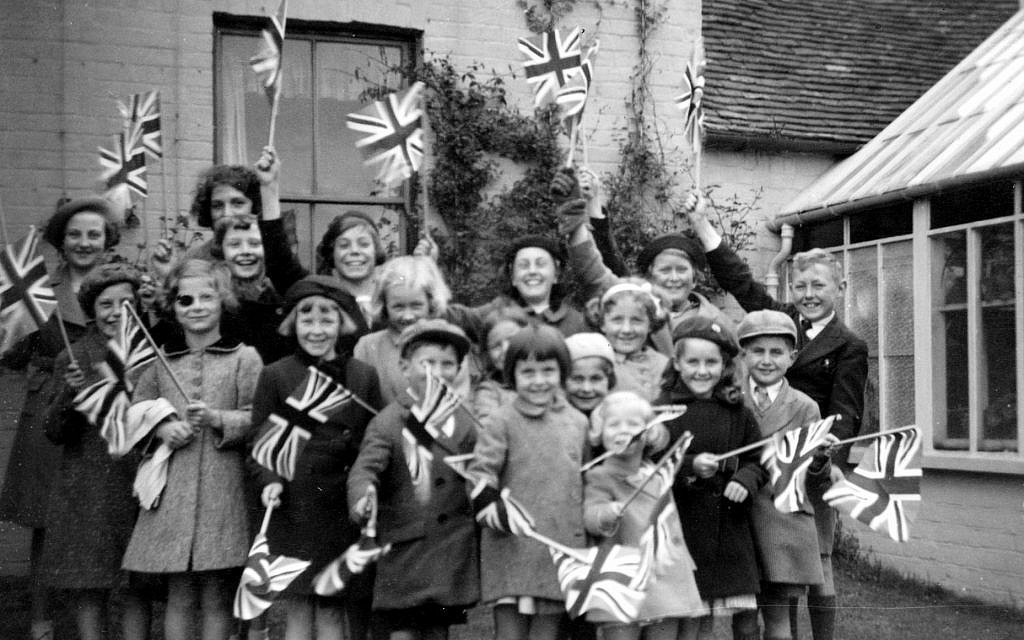
Near the end of her stay in Elham, Audrey Hepburn (fourth from left) waves the Union Jack. (Dotti Collection)
After Britain declared war on Germany in September 1939, Hepburn's mother moved her daughter back to Arnhem in the hope that, as during the First World War, the Netherlands would remain neutral and be spared a German attack. While there, Hepburn attended the Arnhem Conservatory from 1939 to 1945. She had begun taking ballet lessons during her last years at boarding school, and continued training in Arnhem under the tutelage of Winja Marova, becoming her "star pupil". After the Germans invaded the Netherlands in 1940, Hepburn used the name Edda van Heemstra, because an "English-sounding" name was considered dangerous during the German occupation. Her family was profoundly affected by the occupation.
Had we known that we were going to be occupied for five years, we might have all shot ourselves. We thought it might be over next week… six months… next year… that's how we got through.
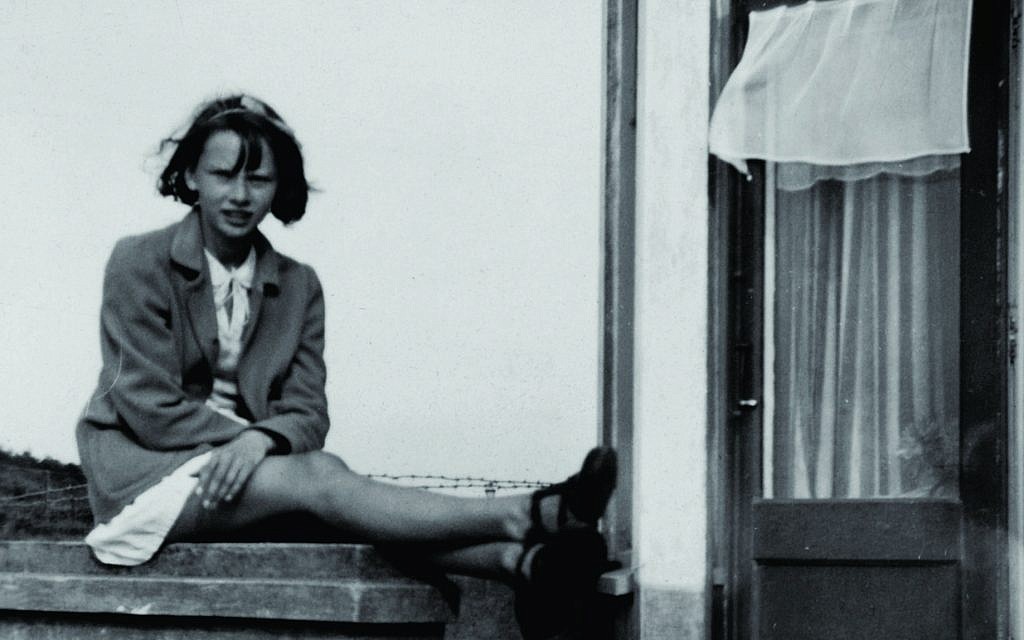
Audrey Hepburn at around the time the Nazi occupation of the Netherlands began. (Dotti Collection)
After the Allied landing on D-Day, living conditions grew worse, and Arnhem was subsequently heavily damaged during Operation Market Garden. During the 1944-45 Dutch famine, the Germans hindered or reduced the already limited food and fuel supplies to civilians in retaliation for Dutch railway strikes that were held to disrupt the occupation. Like others, Hepburn's family resorted to making flour out of tulip bulbs to bake cakes and biscuits,[38][39] a source of starchy carbohydrates; Dutch doctors provided recipes for using tulip bulbs throughout the famine. Suffering from the effects of malnutrition, after the war ended Hepburn became gravely ill with jaundice, anaemia, oedema, and a respiratory infection.
In October 1945, a letter from Ella asking for help was received by Micky Burn, a former lover and British Army officer with whom she had corresponded whilst he was a prisoner of war in Colditz Castle. He sent back thousands of cigarettes, which she was able to sell on the black market and thus buy the penicillin which saved Hepburn's life. The Van Heemstra family's financial situation changed significantly through the occupation, during which time many of their properties (including their principal estate in Arnhem) were damaged or destroyed.
Personal
Life
In 1952, Hepburn became engaged to industrialist James Hanson, whom she had known since her early days in London. She called it "love at first sight", but after having her wedding dress fitted and the date set, she decided the marriage would not work because the demands of their careers would keep them apart most of the time. She issued a public statement about her decision, saying "When I get married, I want to be really married". In the early 1950s, she also dated future Hair producer Michael Butler.
At a cocktail party hosted by mutual friend Gregory Peck, Hepburn met American actor Mel Ferrer, and suggested that they star together in a play. The meeting led them to collaborate in Ondine, during which they began a relationship. Eight months later, on 25 September 1954, they were married in Bürgenstock, Switzerland,while preparing to star together in the film War and Peace (1956). She and Ferrer had a son, Sean Hepburn Ferrer, born on June 17, 1960. After a 14-year marriage, the couple divorced in 1968.
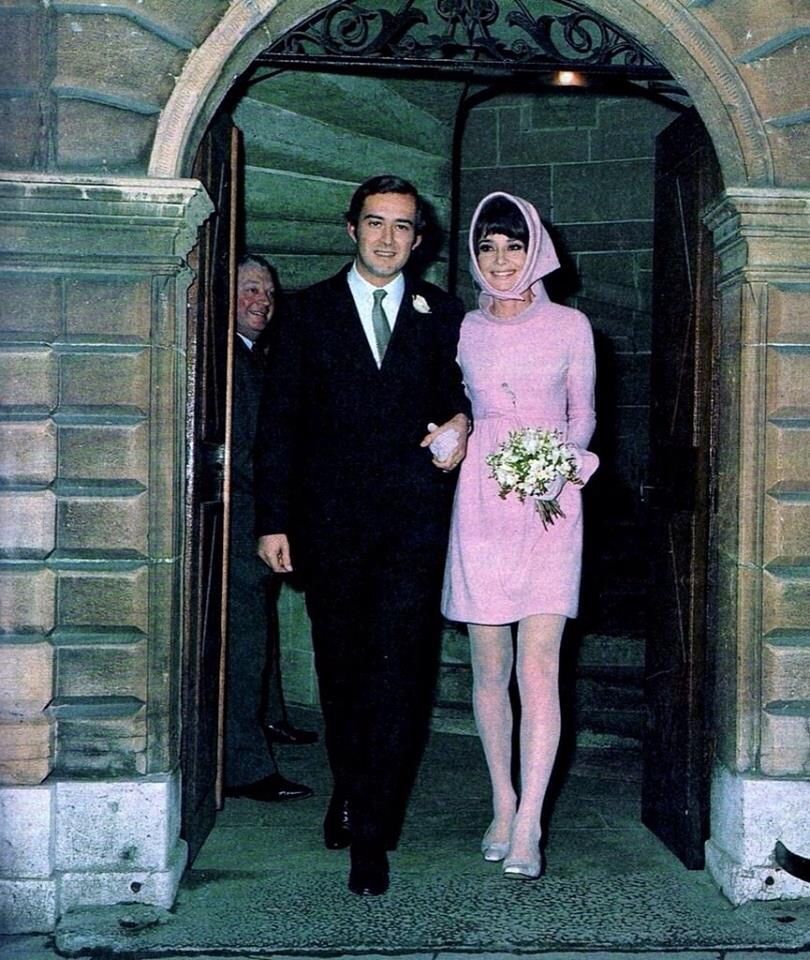
Audrey Hepburn and Andrea Dotti on their wedding day.
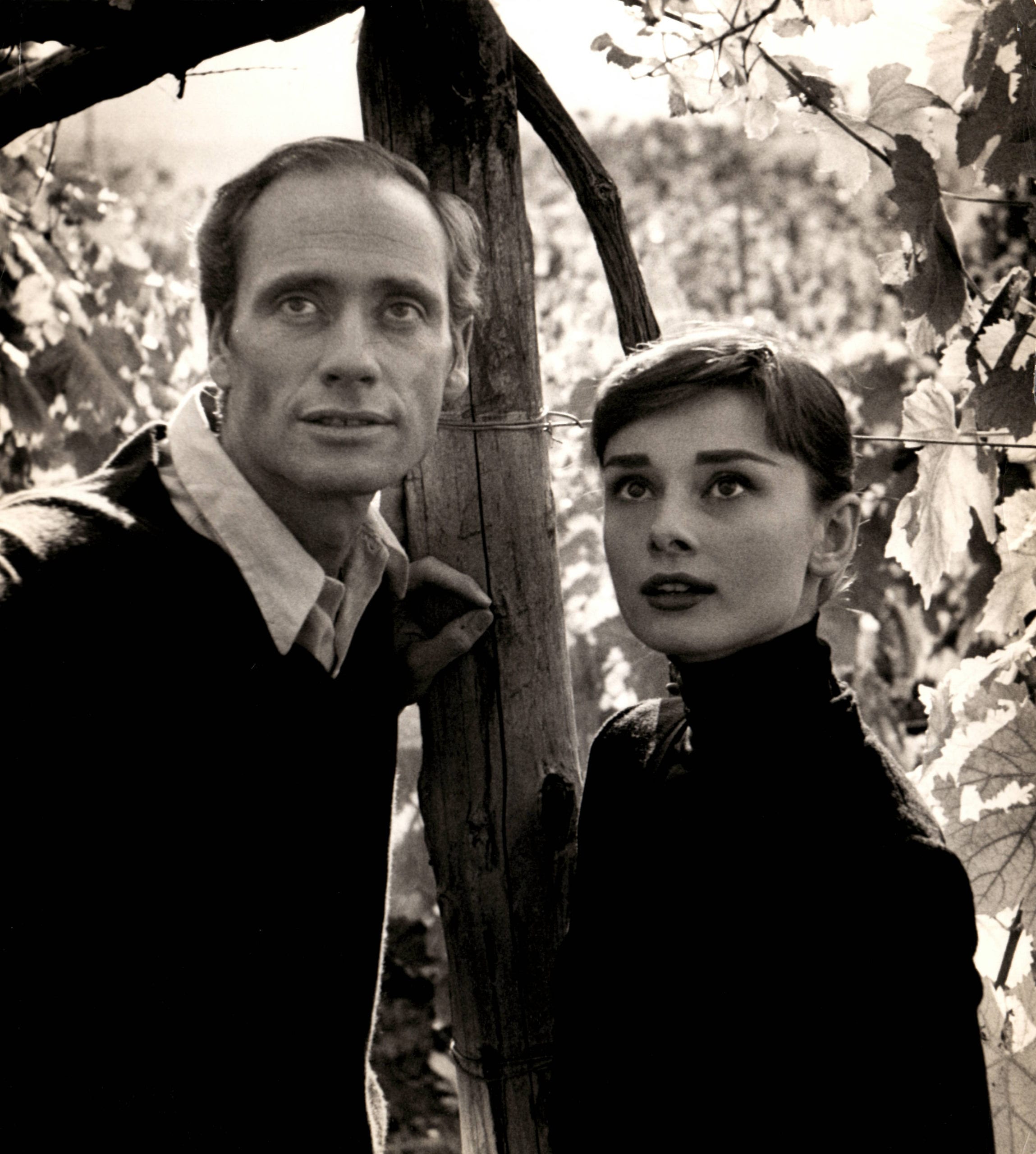
Audrey Hepburn and Mel Ferrer. (George Daniell)
Hepburn met her second husband, Italian psychiatrist Andrea Dotti, on a Mediterranean cruise with friends in June 1968. She believed she would have more children and possibly stop working. They married on 18 January 1969, and their son Luca Andrea Dotti was born on 8 February 1970. While pregnant with Luca in 1969, Hepburn was more careful, resting for months before delivering the baby via caesarean section. Hepburn suffered a miscarriage in 1974. Dotti and Hepburn were unfaithful, he with younger women and she with actor Ben Gazzara during the filming of Bloodline (1979). The marriage lasted twelve years and was dissolved in 1982.
From 1980 until her death, Hepburn was in a relationship with Dutch actor Robert Wolders, the widower of actress Merle Oberon. She had met Wolders through a friend during the later years of her second marriage. In 1989, she called the nine years she had spent with him the happiest years of her life, and stated that she considered them married, just not officially.
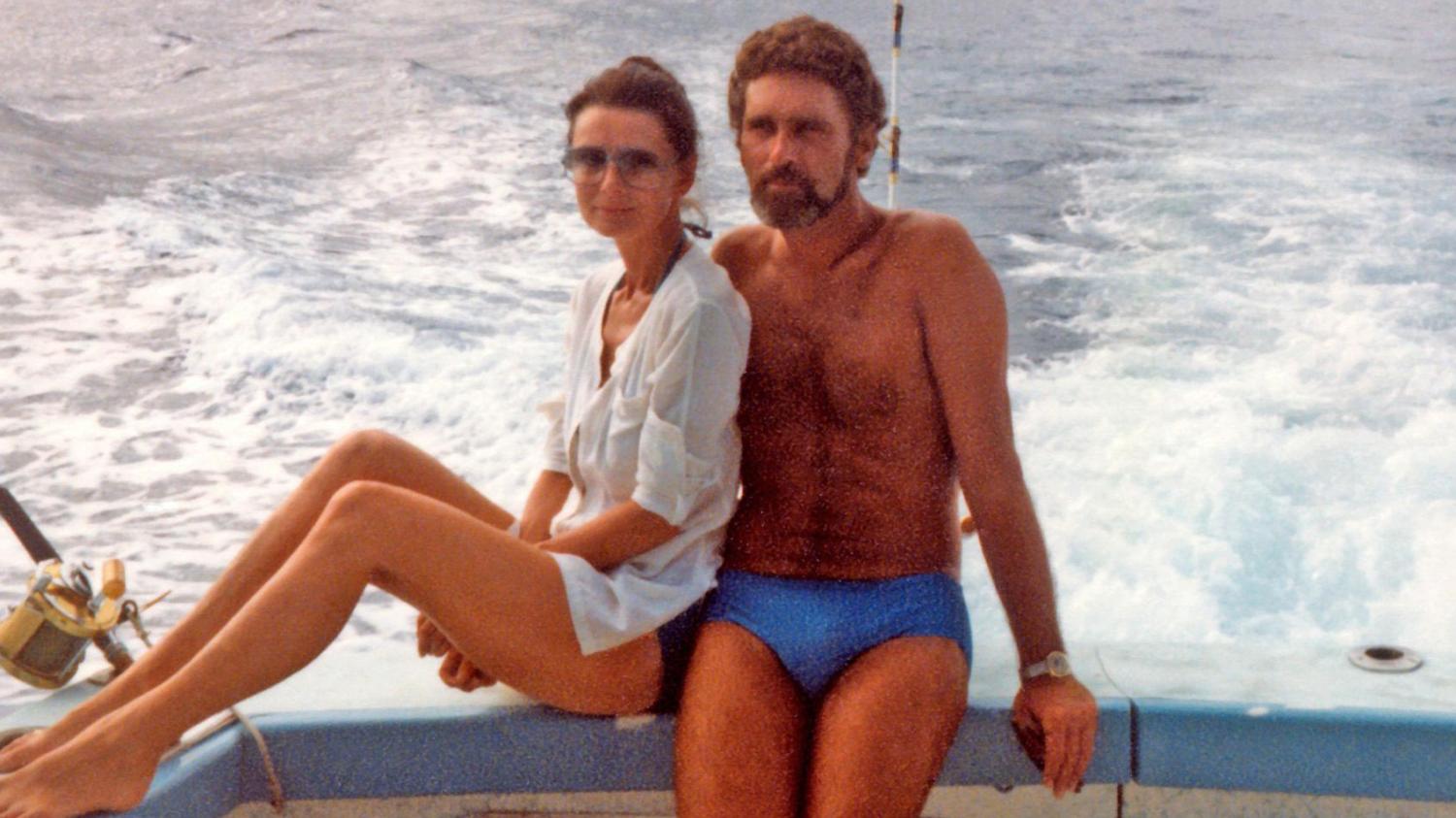
Audrey Hepburn with Robert Wolders in Hawaii in 1981. (Audrey Hepburn Estate Collection)
Upon returning from Somalia to Switzerland in late September 1992, Hepburn developed abdominal pain. While initial medical tests in Switzerland had inconclusive results, a laparoscopy performed at the Cedars-Sinai Medical Center in Los Angeles in early November revealed a rare form of abdominal cancer belonging to a group of cancers known as pseudomyxoma peritonei. Having grown slowly over several years, the cancer had metastasised as a thin coating over her small intestine. After surgery, Hepburn began chemotherapy.
She spent her last days in hospice care at her home in Tolochenaz, Vaud, and was occasionally well enough to take walks in her garden, but gradually became more confined to bedrest.
On the evening of 20 January 1993, Hepburn died in her sleep at home. Funeral services were held at the village church of Tolochenaz on 24 January 1993. Maurice Eindiguer, the same pastor who wed Hepburn and Mel Ferrer and baptised her son Sean in 1960, presided over her funeral, while Prince Sadruddin Aga Khan of UNICEF delivered a eulogy. Many family members and friends attended the funeral, including her sons, partner Robert Wolders, half-brother Ian Quarles van Ufford, ex-husbands Andrea Dotti and Mel Ferrer, Hubert de Givenchy, executives of UNICEF, and fellow actors Alain Delon and Roger Moore. Flower arrangements were sent to the funeral by Gregory Peck, Elizabeth Taylor, and the Dutch royal family.Later on the same day, Hepburn was interred at the Tolochenaz Cemetery.